
TL;DR:
- Page experience, content quality, and backlinks are the main factors influencing search rankings in 2026.
- Building thorough topical content and improving user experience are key for long-term SEO success.
- Focus practices: fix technical issues first, then develop content, followed by strategic backlink building.
Pouring time and money into SEO and seeing little movement in the rankings is one of the most demoralising experiences a small business owner can face. The problem is rarely effort. It is almost always focus. Search engines evaluate hundreds of signals, but only a handful carry genuine weight in 2026, and spending resources on the wrong ones is the fastest way to burn your budget. This article maps out the ranking factors that truly drive results for UK small and medium-sized enterprises (SMEs), explains exactly how much influence each one carries, and gives you a practical framework for prioritising your efforts so every action you take moves the needle.
Table of Contents
- Understanding how search engines rank your site
- Content quality and topical authority: your primary competitive edge
- Backlinks: building authority through strategic relationships
- Page experience and technical performance: the silent influencers
- How to prioritise SEO factors for your business
- Why common SEO advice is failing UK small businesses
- Get expert SEO help and drive measurable growth
- Frequently asked questions
Key Takeaways
| Point | Details |
|---|---|
| Prioritise quality content | Creating comprehensive, relevant content is the most effective way to boost rankings and attract the right visitors. |
| Focus on user experience | Optimising technical factors and visitor engagement helps secure lasting visibility in competitive markets. |
| Build credible backlinks | Strategically earning links from authoritative, relevant sources strengthens your site’s trust and authority. |
| Regularly audit and adapt | Review and refine your SEO strategy as search algorithms and competitive landscapes evolve. |
Understanding how search engines rank your site
Search engines do not rank websites on gut feeling. They use a layered scoring system that weighs technical performance, content relevance, and off-site authority signals simultaneously. Understanding which of those layers carries the most weight is the first step to spending your SEO budget wisely.
Recent research across one million search engine results pages (SERPs) gives us some of the clearest benchmarks we have seen. Page experience holds 28% of influence, content quality accounts for 25%, and backlinks carry 22%. These three factors alone represent roughly three quarters of what determines where your page lands. Everything else, including structured data, internal linking, and keyword placement, fills in the remaining quarter.
What this means in practice is straightforward. If your site loads slowly, your content is thin, and you have few quality backlinks, you are fighting with one hand tied behind your back regardless of how well you have optimised your meta descriptions.
Some widely repeated SEO beliefs do not hold up under scrutiny. Domain age and social media are not direct ranking factors, according to current industry analysis. Many small business owners assume that a website which has been online for a decade automatically has an advantage. It does not. A newer site with strong content and earned links can outrank an older domain within months.
Here is a quick summary of what the evidence actually supports:
- Page experience (Core Web Vitals): 28% influence, the single largest factor
- Content quality and topical coverage: 25% influence, the most controllable on-page lever
- Backlinks and referring domains: 22% influence, declining but still significant
- On-page optimisation (keywords, schema, headings): remaining weight shared across multiple signals
- Domain age, social media activity: no measurable direct impact
For more practical context on how these signals interact, Google ranking tips and understanding search rankings offer useful starting points for UK business owners building their strategy.
The takeaway here is simple. Focus on the big three. Everything else is secondary until those foundations are solid.
Content quality and topical authority: your primary competitive edge
Content is not just about writing blog posts. It is about demonstrating to Google that your website is the most credible, relevant, and useful resource on a given subject within your niche. That distinction matters enormously for how long your rankings hold.
Topical coverage is the number one on-page factor across one million SERPs studied. This means Google does not just reward individual pages that mention the right keywords. It rewards websites that cover a subject thoroughly across multiple interconnected pages. A plumber in Manchester who has pages covering boiler installation, boiler repair, emergency call-outs, and heating system maintenance will consistently outrank a competitor whose site has a single generic “services” page.
Google evaluates content through the lens of E-E-A-T, which stands for Experience, Expertise, Authoritativeness, and Trust. This is not a direct scoring metric, but it shapes how Google’s quality raters assess pages and informs how the algorithm weighs content signals. A local solicitor who writes detailed guides based on real case experience will satisfy E-E-A-T far better than a page stuffed with keywords and no genuine insight.
Here are the most effective content strategies for UK SMEs:
- Build topical clusters: create a central “pillar” page on your core service and link it to supporting pages that address related questions in depth
- Use schema markup (structured data) to help Google understand your content type, whether that is a local business, a product, a review, or an FAQ
- Write for user intent: match the format and depth of your content to what someone actually wants when they type a query
- Update existing pages regularly to keep them accurate and relevant, since freshness can influence rankings for time-sensitive topics
“The businesses that win in organic search are not those who publish the most content. They are those who answer questions more completely than anyone else in their market.”
Building topical clusters is a well-established strategy that pays dividends over months and years, not just weeks. The compounding effect of a well-structured content architecture is one of the most underused advantages available to SMEs.
Pro Tip: Before writing new content, audit what you already have. Improving and expanding three existing pages often delivers faster ranking gains than publishing ten new ones from scratch.
Good content also needs a good home. The way your SEO website design is structured affects how Google crawls and values your pages. A poor website structure can actively suppress well-written content from ranking, which is a problem many SMEs do not even realise they have.
Backlinks: building authority through strategic relationships
Content is king, but without authority signals like backlinks, even the best pages may struggle for visibility. A backlink is simply a link from another website pointing to yours. Search engines treat these as votes of confidence. The more credible the source of that vote, the more weight it carries.
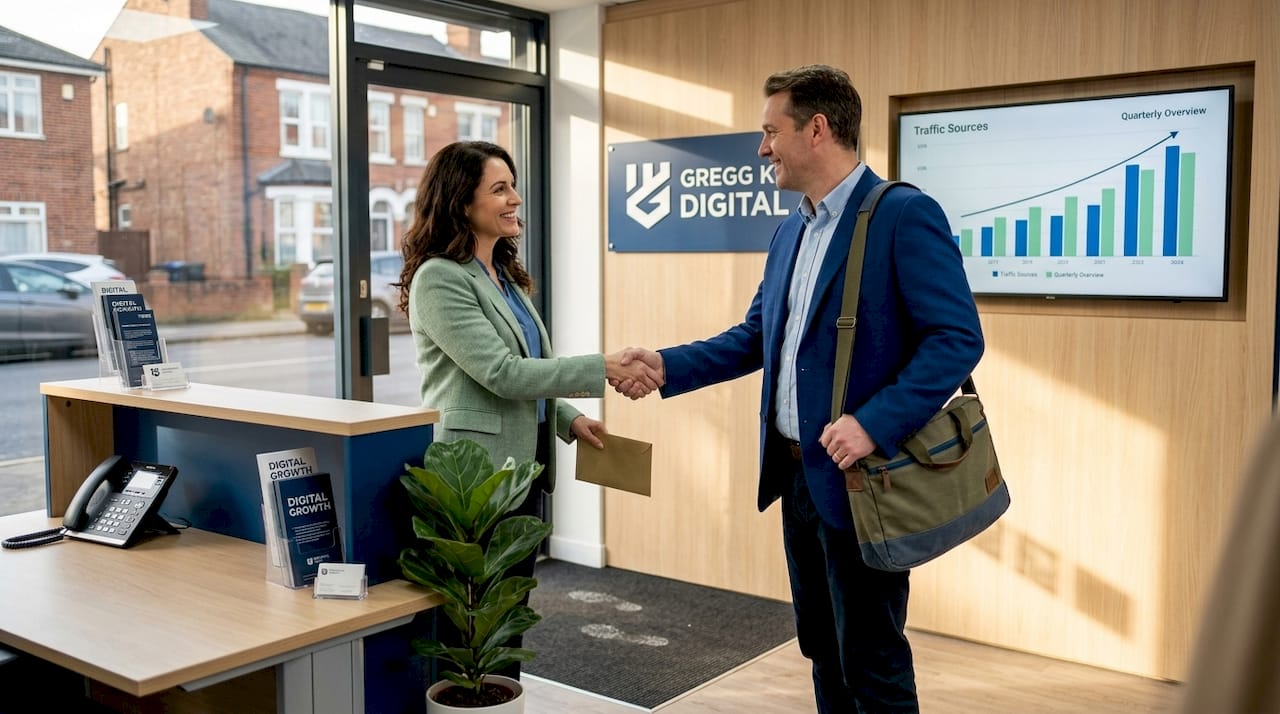
Empirical benchmarks assign 22% weight to backlinks, and the correlation between referring domains and rankings remains high at 0.85. That is a strong statistical relationship. Even as content and page experience have grown in importance, backlinks remain one of the clearest signals of a site’s authority.
Industry-leading tools and studies from Ahrefs, Moz, and Semrush consistently place backlinks among the top ranking predictors, reinforcing that this signal is not going away. What has changed is the emphasis on quality over quantity.
Here is a comparison of link-building approaches and their typical impact:
| Strategy | Quality level | Risk level | Time to results |
|---|---|---|---|
| Guest posting on relevant sites | High | Low | 2 to 4 months |
| Local business partnerships | High | Very low | 1 to 3 months |
| Digital PR and press mentions | Very high | Very low | 3 to 6 months |
| Directory submissions (quality) | Medium | Low | 1 to 2 months |
| Link farms and paid schemes | Very low | Very high | Short term only |
For UK SMEs, the most practical and sustainable approach to earning backlinks follows this sequence:
- Identify local and industry-specific websites that your target customers also visit, such as trade associations, local news outlets, and business directories
- Create genuinely useful resources such as guides, tools, or original research that other sites will want to reference
- Reach out to complementary businesses for partnership content, joint guides, or reciprocal mentions where both audiences benefit
- Pursue digital PR by sharing newsworthy stories about your business with local journalists and industry publications
- Avoid any service offering hundreds of links cheaply, since Google’s spam detection has become highly sophisticated and penalties can take months to recover from
Pro Tip: A single backlink from a well-regarded local news site or industry association is worth more than fifty links from obscure directories. Invest your outreach time accordingly.
For deeper guidance on building authority in your local market, local SEO ranking strategies and the benefits of an SEO consultant are worth exploring if you want expert-led link acquisition.
Page experience and technical performance: the silent influencers
Beyond content and authority, technical foundations and user experience have quietly become make-or-break factors. You can have outstanding content and a solid backlink profile, but if your site is slow, unstable, or difficult to use on a mobile phone, Google will limit how far it climbs.
Core Web Vitals now hold 28% influence, up 8% year on year. This is now the single largest ranking factor category. The three metrics that matter most are:
| Metric | What it measures | Target threshold |
|---|---|---|
| LCP (Largest Contentful Paint) | How fast the main content loads | Under 2.5 seconds |
| INP (Interaction to Next Paint) | How quickly the page responds to user input | Under 200 milliseconds |
| CLS (Cumulative Layout Shift) | How stable the layout is as it loads | Under 0.1 |
Failing any one of these thresholds signals a poor user experience to Google. A page that loads in four seconds, for example, loses roughly half its potential visitors before they even read a single word.
Here is what to focus on to improve page experience:
- Compress and optimise images before uploading, since oversized images are the most common cause of slow load times
- Use a fast, reliable hosting provider based in the UK or with UK-based servers for better latency on local searches
- Eliminate render-blocking scripts by deferring JavaScript that does not need to load immediately
- Ensure your site is fully responsive across all screen sizes, since over 60% of UK searches now happen on mobile devices
- Audit for layout shift issues by checking whether fonts, images, or ads load in a way that pushes content around after the initial render
Pro Tip: Use Google’s free PageSpeed Insights tool to get a scored report on all three Core Web Vitals for any URL on your site. It also provides specific recommendations ranked by impact, which makes it easy to prioritise fixes.
Your SEO-friendly website design choices have a direct bearing on these scores. Many SME websites are built on themes that look attractive but carry unnecessary code weight. Small design tweaks can produce measurable improvements in both load speed and user engagement without a full rebuild.
How to prioritise SEO factors for your business
After examining each significant factor, here is how to put it all into practice for the best return. The mistake most SMEs make is trying to work on everything at once. A focused, sequenced approach consistently outperforms a scattered one.
The right order of operations depends on your starting point, but the evidence points to a clear general sequence. Monitoring engagement and building topical clusters, then boosting with Core Web Vitals improvements and earned backlinks, is the approach that delivers compounding results over time.
Here is a practical prioritisation framework:
- Month one to two: Conduct a full technical audit. Fix crawl errors, broken links, slow load times, and mobile usability issues. These are the foundations everything else rests on.
- Month two to four: Audit your existing content. Identify gaps in topical coverage and expand or consolidate pages to build genuine authority in your core subject areas.
- Month three onwards: Begin a structured backlink acquisition campaign targeting local and industry-relevant sources. Do not start this before your technical and content foundations are solid.
- Ongoing: Review Core Web Vitals monthly and reassess your content and backlink strategy every quarter.
| Priority | Action | Expected impact |
|---|---|---|
| 1 | Fix technical and speed issues | Immediate ranking stability |
| 2 | Build topical content clusters | Medium-term ranking growth |
| 3 | Earn quality backlinks | Long-term authority gains |
| 4 | Optimise Core Web Vitals | Sustained ranking protection |
Many local SEO issues that prevent UK businesses from appearing for high-intent searches are technical in nature and can be resolved relatively quickly once identified. Fixing them first creates the best possible platform for content and link-building efforts to succeed.
Why common SEO advice is failing UK small businesses
Here is an uncomfortable truth. A significant proportion of the SEO advice circulating online is either outdated, oversimplified, or written for large enterprises with substantial budgets. For UK SMEs, following generic advice without understanding the evidence behind it is a reliable way to waste six months and see no results.
The businesses we see struggling most are those who have invested heavily in tactics that no longer carry weight. Keyword stuffing, low-quality directory submissions, and chasing domain age are still being recommended by some agencies. Meanwhile, the factors that actually move rankings, particularly page experience and topical authority, are being ignored because they require more sustained effort.
The most valuable SEO wins for small businesses almost always start with fixing what is broken technically, then systematically building content depth. Backlinks follow naturally when your content is genuinely useful and your site is a pleasure to use. Trying to shortcut that sequence rarely ends well.
For practical guidance on building the right foundation, SEO ranking success tips grounded in current evidence are a far better starting point than chasing the latest SEO trend.
Get expert SEO help and drive measurable growth
Understanding ranking factors is one thing. Applying them consistently, in the right order, with the right tools, is where most business owners need support.
At Gregg King, we work exclusively with UK SMEs to build SEO strategies grounded in current evidence, not guesswork. From SEO and website design that meets Core Web Vitals standards to Google Business Profile optimisation that drives local footfall, every service is tailored to your specific market and goals. If you want a clear picture of where your site stands and what to prioritise first, our free consultation gives you honest, actionable insight. Discover the benefits of working with an SEO consultant who has been delivering measurable results for UK businesses for over 20 years.
Frequently asked questions
What is the single most important SEO ranking factor in 2026?
Topical coverage is the top on-page factor across one million SERPs studied, making content quality and depth the strongest predictors of high rankings when combined with strong page experience signals.
Do backlinks matter as much as they used to?
Backlinks remain valuable for authority, but their weight has declined to 22% with greater emphasis now placed on content relevance and user engagement rather than sheer volume of links.
How do I measure page experience for SEO?
Use Google’s Core Web Vitals, which measure LCP for load speed, INP for interactivity, and CLS for visual stability, to assess whether your site meets the usability standards Google now rewards.
Is social media activity a direct ranking factor?
No. Current research confirms that social metrics are not direct signals for Google’s ranking algorithm, though active social presence can increase content visibility and drive traffic that indirectly supports engagement metrics.
How often should I update my SEO priorities?
Audit your technical and content performance quarterly, since algorithm updates and competitor movements can shift which factors carry the most weight for your specific market and search terms.