TL;DR:
- Link building remains a powerful SEO tactic, especially when focusing on quality, relevance, and trust.
- Modern strategies emphasize earning valuable links through helpful content, digital PR, and genuine partnerships.
- Sustainable SEO success depends on long-term efforts to create authority, not quick link acquisition tricks.
There is ongoing debate about whether link building still matters after Google’s many algorithm updates over the past few years. Some business owners have been told links are dead. Others are chasing them frantically with no clear strategy. Both approaches are wrong. Link building remains one of the most powerful levers you can pull to improve your search rankings, but only when you understand what it actually means and how to do it properly. This guide cuts through the noise, explains the fundamentals, and gives you practical steps to build genuine authority for your UK business.
Table of Contents
- What is link building?
- Why link building matters for UK businesses
- How modern link building works: Earn not just acquire
- Practical link building strategies you can use today
- What most experts miss about link building today
- Ready to boost your rankings? Expert help for UK businesses
- Frequently asked questions
Key Takeaways
| Point | Details |
|---|---|
| Links still matter | Links remain crucial for SEO success even after Google’s latest updates. |
| Earning beats acquiring | Creating value and earning links is now more effective than old tactics. |
| Focus on quality | Prioritise links from trusted and relevant sources for better rankings. |
| Practical strategies exist | Tactics like guest blogging and local partnerships help UK businesses build strong links. |
What is link building?
Link building is the process of acquiring hyperlinks from other websites to your own. When another site links to yours, Google sees it as a signal that your content is worth referencing. Think of it like word-of-mouth recommendations in the offline world. The more credible people who vouch for you, the more trustworthy you appear.
Before going further, it helps to understand a few key terms. A backlink is simply a link pointing to your site from an external source. Anchor text is the clickable wording used in that link. A referring domain is the website providing the link. These three terms come up constantly in any SEO conversation.
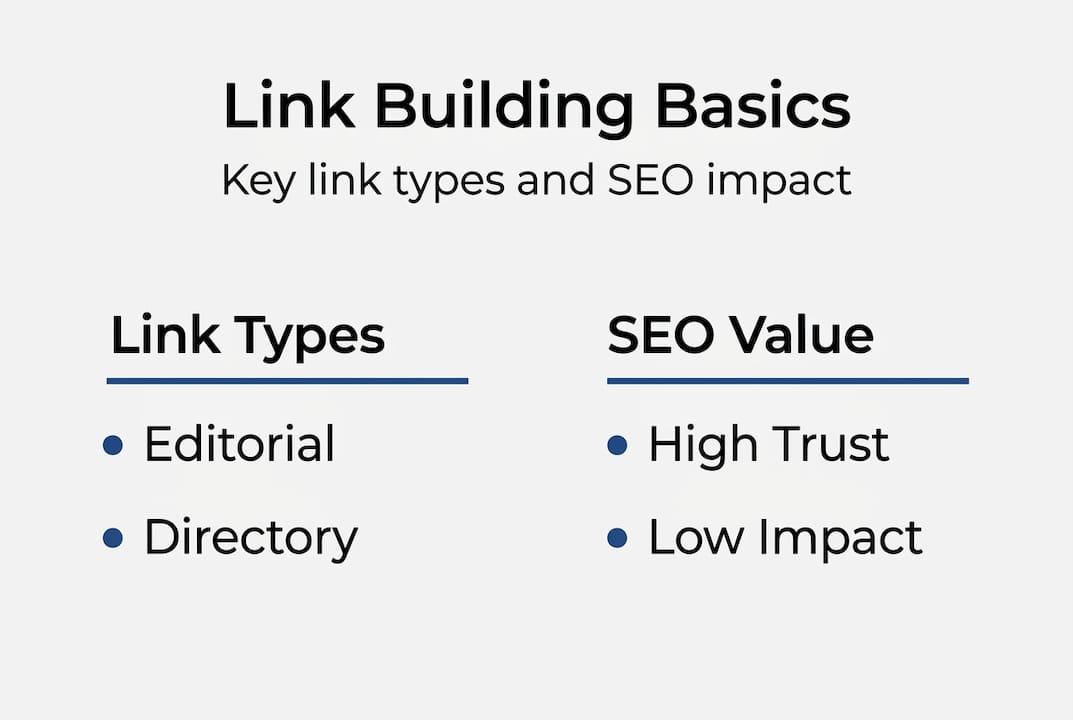
Not all links are created equal. Here is a breakdown of the main types you will encounter:
| Link type | How it is earned | Typical SEO value |
|---|---|---|
| Editorial | Earned naturally through quality content | Very high |
| Guest post | Written for another site with a link back | Medium to high |
| Directory | Listed in a business or niche directory | Low to medium |
| Dofollow | Passes ranking credit to your site | High |
| Nofollow | Does not pass ranking credit directly | Low but still useful |
| Sponsored | Paid placement, must be disclosed | Neutral if tagged correctly |
Editorial links are the gold standard. They happen when a journalist, blogger, or industry site references your content because it is genuinely useful. Guest posts involve you writing an article for another website in exchange for a link. Directory listings can help with local visibility but carry less weight than they once did.
Links remain one of Google’s main ranking signals, though the emphasis is shifting towards earning them rather than simply collecting them. Google uses links to discover new pages and to assess how much trust a site deserves. A well-structured site that attracts quality links will consistently outperform one that ignores this entirely. If you want to understand how SEO and website design work together to support this, it is worth exploring how your site’s foundations affect link performance.
Key link building concepts to remember:
- Dofollow links pass authority and directly influence rankings
- Nofollow links do not pass authority but can still drive real traffic
- Anchor text should be varied and natural, not repetitive keyword stuffing
- Referring domains matter more than the raw number of links
Why link building matters for UK businesses
Having defined what link building is, let us examine why it should matter to your business. At its core, every quality link pointing to your site acts as a vote of confidence in Google’s eyes. The more credible votes you accumulate, the more Google trusts your site, and the higher you tend to rank.
High-quality backlinks strongly correlate with higher Google rankings across multiple large-scale SEO studies. This is not a coincidence. It reflects how Google’s algorithm was originally designed and how it continues to function today.
“A single link from a respected industry publication can do more for your rankings than fifty links from obscure directories. Quality is everything.”
For UK small and medium-sized businesses, the practical benefits are significant:
- Improved search rankings that put you in front of customers actively searching for your services
- Referral traffic from relevant sites, bringing visitors who are already interested in what you offer
- Increased brand credibility when your business appears alongside trusted industry names
- Stronger local prominence when you earn links from local news sites, chambers of commerce, and regional directories
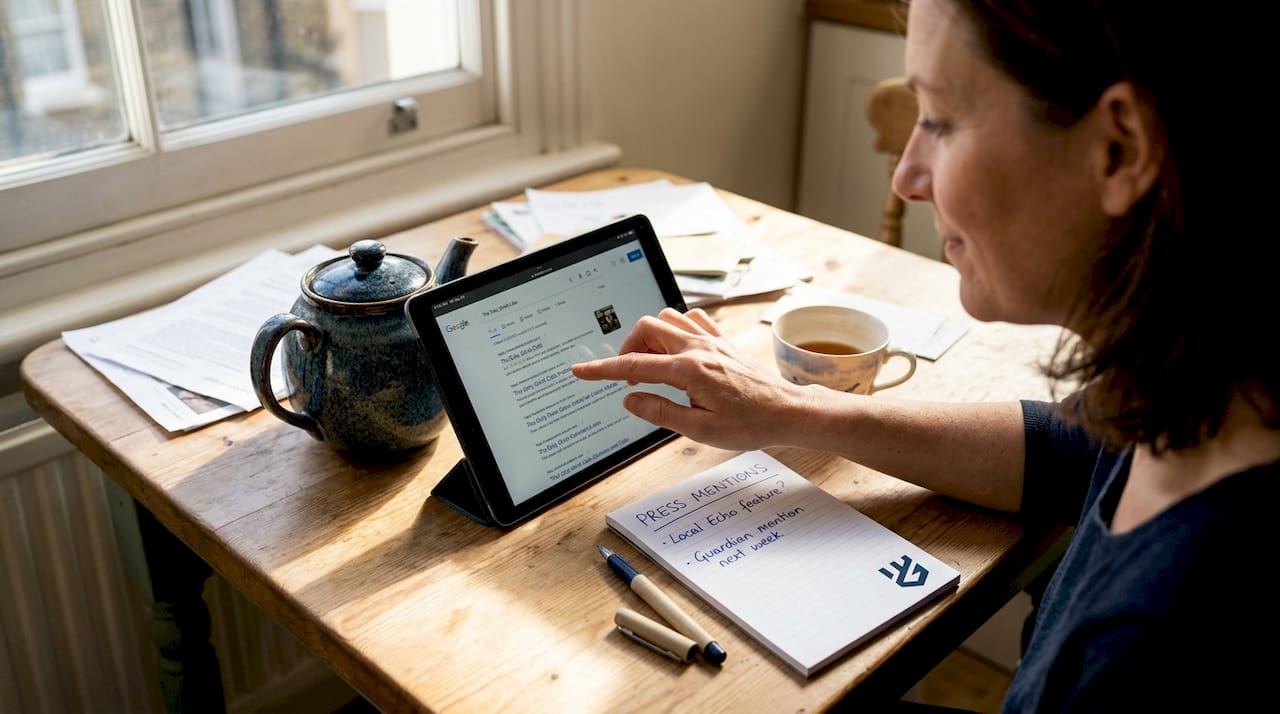
Consider a UK-based plumbing company that earns a mention in a regional trade publication and gets listed on the local council’s approved contractor page. Those two links alone can shift their visibility considerably in local search results. They signal to Google that this business is legitimate, active, and trusted within its community.
For practical guidance on climbing the rankings, reviewing tips to rank high on Google alongside your link strategy makes a real difference. You should also consider how web design and SEO success are connected, because a poorly built site can undermine even the best link profile.
How modern link building works: Earn not just acquire
Understanding the why, it is critical to grasp how the approach to link building has shifted significantly over the past decade. The old playbook involved submitting your site to hundreds of directories, buying links in bulk, and swapping links with unrelated websites. Google’s Penguin algorithm update changed all of that, and the consequences for those still using outdated tactics can be severe.
Earning links by creating genuine value is now firmly favoured over manipulative link acquisition. This is not just Google’s preference. It is also what actually works long-term.
Here is a clear comparison of old versus new approaches:
| Old approach | Modern approach |
|---|---|
| Bulk directory submissions | Targeted, niche-relevant directories |
| Buying links from link farms | Digital PR and media outreach |
| Reciprocal link swapping | Genuine partnership content |
| Keyword-stuffed anchor text | Natural, varied anchor text |
| Quantity over quality | Quality and relevance first |
| Automated link building tools | Relationship-based outreach |
Modern link building is really about becoming a resource. When you publish research, useful guides, or tools that others in your industry genuinely want to reference, links follow naturally. This is sometimes called digital PR, and it is one of the most effective strategies available to UK businesses right now.
A poor website structure can quietly undermine your link building efforts too. If the pages people are linking to are slow, confusing, or poorly laid out, those links deliver far less value.
Pro Tip: Before chasing new links, audit your existing content. Identify your most useful pages and invest in making them genuinely outstanding. A single exceptional resource will attract far more links over time than ten average blog posts.
Practical link building strategies you can use today
Now you know the principles, let us move to specific actions you can take right away. These strategies are realistic for businesses without a large marketing budget and are well-suited to the UK market.
-
Guest blogging on relevant UK publications. Identify industry blogs, trade publications, and regional business sites that accept contributions. Write genuinely useful articles for their audience and include a natural link back to a relevant page on your site. Focus on quality over frequency.
-
Local business listings and directories. Get listed on reputable UK directories such as Yell, Thomson Local, and your local chamber of commerce website. These links carry modest SEO value but are important for local visibility and trust signals.
-
Partnership and supplier links. If you work with other businesses, ask whether they feature their partners on their website. A link from a supplier or trade association is often easy to obtain and highly relevant to your industry.
-
Digital PR and media outreach. Respond to journalist requests through platforms like Quoted, share original data or survey results, or comment as an expert on industry trends. Coverage in regional or national press can earn powerful links that are very difficult to replicate otherwise.
Common UK pitfalls to avoid:
- Accepting paid link offers from cold email outreach. These are almost always low-quality and risky.
- Using automated tools to build links at scale. Google detects these patterns and penalises accordingly.
- Ignoring the relevance of the linking site. A link from an unrelated website in an unrelated country adds little value.
Consistent, natural link earning leads to sustainable SEO growth. There are no shortcuts that hold up over time. For a broader view of what a strong SEO strategy looks like, our SEO services overview covers the full picture.
Pro Tip: Build relationships with UK suppliers, trade bodies, and complementary businesses before you need links from them. When the relationship is genuine, the link request feels natural rather than transactional.
What most experts miss about link building today
Most guides on link building recycle the same list of tactics without addressing the deeper shift in how Google evaluates authority. The uncomfortable truth is that conventional wisdom lags behind the realities of Google’s current algorithm. Chasing every directory or sending hundreds of outreach emails is not a strategy. It is noise.
What actually works now is building something worth linking to. That means creating unique resources, original research, or genuinely helpful content that your industry does not already have. UK SMEs are well-placed to do this because they often have specialist knowledge that larger, more generic competitors lack.
The businesses we see achieving real SEO success are not the ones with the most links. They are the ones with the most relevant, trusted links earned through consistent effort over time. There are no overnight results here. True authority is built over months and years, not days. If you approach link building as a long-term investment in your brand’s credibility rather than a quick ranking trick, you will make far better decisions about where to focus your time and resources.
Ready to boost your rankings? Expert help for UK businesses
Link building done properly takes time, expertise, and a clear strategy. If you are spending hours on outreach with little to show for it, working with a specialist can accelerate your results considerably.
At Gregg King, we offer tailored SEO consultant benefits that include link building audits, digital PR strategy, and done-for-you outreach designed specifically for UK businesses. Whether you are starting from scratch or looking to improve an existing approach, our digital marketing for small businesses services are built around sustainable, measurable growth. We also integrate link strategy with SEO and website design to ensure every link you earn actually converts into rankings and revenue. Get in touch for a free consultation today.
Frequently asked questions
Is link building still important for SEO in 2026?
Yes. Despite changes in Google’s algorithm, high-quality links remain a major ranking factor and are essential for building lasting website authority.
What is the difference between earning and acquiring links?
Earning links means attracting them naturally through valuable content or PR activity, while acquiring links typically involves proactive outreach, requests, or value creation to secure placements.
How long does it take to see results from link building?
Most businesses notice meaningful ranking improvements within three to six months, though this depends on competition levels, the quality of links earned, and how consistently the strategy is applied.
Are all backlinks valuable for my website?
No. Google prioritises links from relevant, authoritative sites, and manipulative links can bring penalties that actively harm your rankings rather than improve them.
Recommended
- Why your website structure could be holding back your rankings in 2026 (and how to fix it) – Gregg King SEO
- Are SEO Services Worth It? A Comprehensive Look at the Benefits and Costs – Gregg King SEO
- The Power of SEO: Transforming Businesses in the Digital Age – Gregg King SEO
- How to Run a 2026 SEO Audit: Step-by-step to Uncover Growth for UK Businesses – Gregg King SEO