TL;DR:
- Small UK businesses can attract local customers with simple, purpose-driven website design.
- Clear structure, consistent branding, and mobile optimization are essential for higher engagement.
- Regular updates and trust signals increase conversions and improve search rankings.
Running a small business in the UK means competing with thousands of similar companies online, many of whom have bigger budgets and longer histories. Your website is often the first impression a potential customer gets, and if it fails to engage them within seconds, they’re gone. The good news is that you don’t need a massive budget or a full-time developer to build something that genuinely works. With the right approach, even modest websites can attract local customers, generate enquiries, and convert visitors into paying clients. These practical, expert-backed tips will show you exactly how.
Table of Contents
- Understand your audience and set clear goals
- Prioritise clean structure and user-friendly navigation
- Make design visually appealing and on-brand
- Optimise for mobile and local search
- Boost engagement with strong calls to action and trust signals
- What most experts miss about website design for small UK businesses
- Next steps: get expert help to transform your website
- Frequently asked questions
Key Takeaways
| Point | Details |
|---|---|
| Know your audience | Tailor your website design to what your ideal local customers need and look for. |
| Keep navigation simple | A logical site structure improves both user experience and search rankings. |
| Be visually consistent | Consistent branding and quality visuals build trust and make your business memorable. |
| Optimise for mobile and local | Mobile-friendly, locally optimised sites reach more customers and drive more action. |
| Use clear calls to action | Prompt visitors to act with clear CTAs and credible trust signals on every page. |
Understand your audience and set clear goals
Every effective website starts with a simple question: who are you trying to reach? For UK small businesses, this often means local customers searching for specific services nearby. Before you touch a single design element, you need to know what your visitors want, what problems they’re trying to solve, and what action you want them to take once they land on your site.
Defining measurable goals is equally important. Are you aiming for more phone enquiries, online bookings, or direct sales? Without a clear objective, your design decisions become guesswork. A plumber in Manchester has different goals from a boutique in Brighton, and your site should reflect that specificity.
Sites designed with user intent in mind show significantly higher engagement, which means fewer visitors bouncing away and more of them taking meaningful action.
Here are the key questions to answer before you start designing:
- Who is your ideal local customer, and what do they search for?
- What is the single most important action you want visitors to take?
- What information do they need before they feel confident contacting you?
- Which pages or services generate the most revenue for your business?
- What do competitors’ sites do well, and where do they fall short?
Pro Tip: Use Google Analytics and a simple one-question survey on your existing site to find out why visitors leave without contacting you. Even ten responses can reveal patterns that transform your design decisions.
Audience research doesn’t have to be expensive or time-consuming. A short conversation with five recent customers can surface insights that no tool will give you. Once you know what your audience needs, every design choice, from layout to colour to copy, becomes purposeful rather than decorative.
Prioritise clean structure and user-friendly navigation
Once you know your audience and goals, structure and navigational clarity become your next priority. Think of your website’s structure like a well-organised shop floor. If customers can’t find what they’re looking for within a few seconds, they’ll walk out. The same logic applies online, except the exit is just one click away.
A clean, logical structure helps both users and search engines understand what your site is about. For most small UK businesses, a straightforward set of core pages is all you need:
- Homepage: your first impression and clearest value statement
- About: who you are and why customers should trust you
- Services: what you offer, ideally with one page per main service
- Contact: easy-to-find details including phone, email, and location
- FAQs: answers to the questions your customers ask most often
Avoid the temptation to create dozens of nested pages or overly clever menu labels. Visitors shouldn’t have to think hard to navigate your site. “Our solutions” means nothing; “Plumbing services” means everything.
Poor site structure can lead to lost rankings, sales and trust, making it one of the most costly mistakes a small business can make online.
Common pitfalls include dropdown menus with too many options, pages buried three levels deep, and inconsistent naming between your menu and your page headings. Understanding how messy structure hurts conversions is the first step towards fixing it. Keep your navigation simple, your labels descriptive, and your most important pages no more than one click from the homepage.
Make design visually appealing and on-brand
Clear navigation lays the foundation, but now your site must visually attract and reassure your visitors. First impressions are formed in milliseconds, and your visual design either builds trust or erodes it before a single word is read.
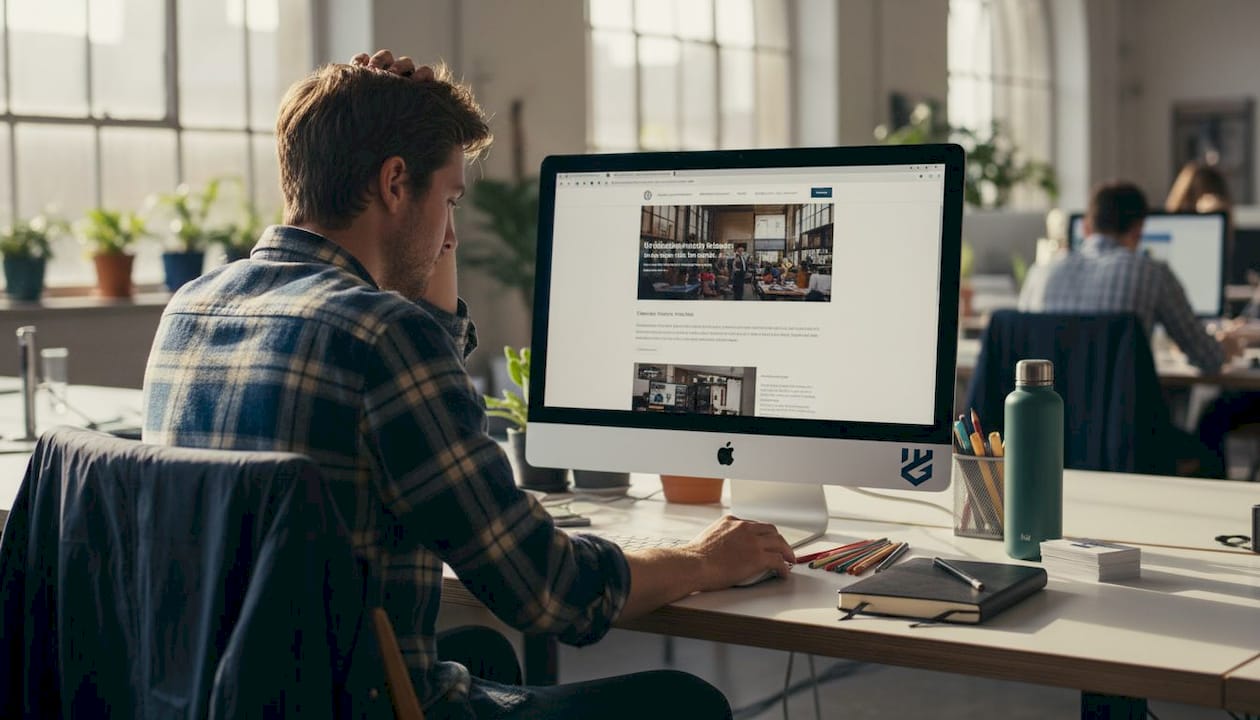
Brand consistency matters more than most small business owners realise. Your website should use the same colours, fonts, and tone as your business cards, social media profiles, and any printed materials. Visitors who encounter a disjointed experience across channels feel uncertain, and uncertainty kills conversions. Branding consistency tips can help you align your visual identity across every touchpoint.
Consistent branding and attractive design improve professionalism and visitor retention, giving your business a competitive edge even against larger rivals.
Here are the visual elements that make the biggest difference:
- Fonts: Choose two at most. One for headings, one for body text. Avoid novelty fonts that are hard to read.
- Colours: Stick to your brand palette. Use contrast to guide the eye towards important elements like buttons.
- Images: Use real photos of your team, premises, or work wherever possible. Stock photos feel generic and reduce trust.
- White space: Give your content room to breathe. Cramped layouts feel overwhelming and untrustworthy.
| Element | Good design | Poor design |
|---|---|---|
| Fonts | Two consistent, readable fonts | Four or more mismatched styles |
| Colour palette | Three brand colours used consistently | Random colours on every page |
| Imagery | Real, high-quality photos | Blurry or generic stock images |
| Layout | Spacious, guided visual flow | Cluttered, no clear focal point |
| Branding | Consistent across all pages | Different styles per section |
Explore quick design upgrades that can transform how professional your site looks without a full redesign. For businesses ready to go further, investing in web design and development from an experienced specialist ensures every visual decision serves a strategic purpose.
Optimise for mobile and local search
After creating a striking and consistent look, focus your efforts on reaching users wherever they are, especially on mobile devices. Over 60% of UK web traffic now comes from smartphones, which means a site that looks great on a desktop but breaks on a phone is actively losing you business every single day.
Responsive design is the baseline. Your site must automatically adjust its layout, font size, and button spacing to suit any screen. Beyond that, page speed matters enormously. Slow-loading pages frustrate users and are penalised by Google. Compress your images, use reliable hosting, and avoid bloated plugins that add seconds to your load time.
A mobile-optimised site can drastically increase user engagement and conversions, making it one of the highest-return improvements you can make.
| Local SEO task | Why it matters | How to do it |
|---|---|---|
| Google Business Profile | Appears in local map results | Claim, verify, and fully complete your listing |
| Local keywords | Matches what nearby customers search | Include town/city names in page titles and copy |
| Map embed | Builds trust and aids navigation | Embed Google Maps on your contact page |
| NAP consistency | Prevents confusion for Google | Same name, address, phone across all directories |
| Local schema markup | Helps Google understand your location | Add structured data to your site’s code |
Pro Tip: Search for your own service in Google using your town name. If you don’t appear in the top results or the map pack, your local signals need urgent attention. Our SEO and website design guide covers exactly how to fix this.
Boost engagement with strong calls to action and trust signals
Having set the foundations, it’s time to ensure your website isn’t just noticed but actually converts visitors into leads or customers. A beautifully designed, fast-loading, mobile-friendly site is still a wasted opportunity if visitors don’t know what to do next.
Calls to action (CTAs) are the prompts that guide visitors towards taking a specific step. They should be clear, visible, and repeated throughout your site. Don’t make visitors scroll to the bottom to find your phone number. Place it in your header, on every service page, and in your footer.
Effective CTAs and trust signals to include:
- Buttons: Use action-oriented language like “Get a free quote” or “Book your appointment today”
- Phone numbers: Make them clickable on mobile so users can call with one tap
- Contact forms: Keep them short. Name, email, and one question is enough to start a conversation
- Testimonials: Real reviews from named local customers carry enormous weight
- Accreditations: Display trade body memberships, certifications, or awards prominently
- Case studies: Brief before-and-after stories show prospects what results to expect
Trust signals and effective CTAs increase enquiry rates for service businesses, often without any additional traffic needed. Explore the full range of services you offer to understand how each one can be presented with compelling CTAs that drive action.
Pro Tip: Minimising friction is the fastest way to boost conversions. Remove any unnecessary steps between a visitor’s interest and their first contact with you. Every extra click or form field costs you enquiries.
What most experts miss about website design for small UK businesses
You now have an actionable checklist, but what really separates successful small business websites from the rest? In our experience working with UK SMEs across many sectors, the gap rarely comes down to design sophistication. It comes down to clarity and trust.
Most generic advice focuses on aesthetics and technical performance, both of which matter. But the businesses that consistently win online are those that communicate their value proposition plainly and make local customers feel immediately understood. A site that speaks directly to someone in your town, addressing their specific concerns, will outperform a polished but generic site every time.
There’s also a damaging myth that a website is a one-time project. Build it, launch it, forget it. That approach guarantees stagnation. Search algorithms evolve, customer expectations shift, and your competitors update their sites. The businesses we see growing consistently treat their website as a living asset, reviewing it quarterly and making small, data-driven improvements.
Some unexpected design tweaks deliver more impact than a complete rebuild. A clearer headline, a more visible phone number, or a single genuine testimonial can shift results dramatically. Don’t wait for a perfect redesign. Start improving what you have today.
Next steps: get expert help to transform your website
Ready to put these strategies into practice? Knowing what to do is only half the challenge. Implementing it correctly, in a way that actually moves your rankings and generates enquiries, requires experience and a clear strategy.
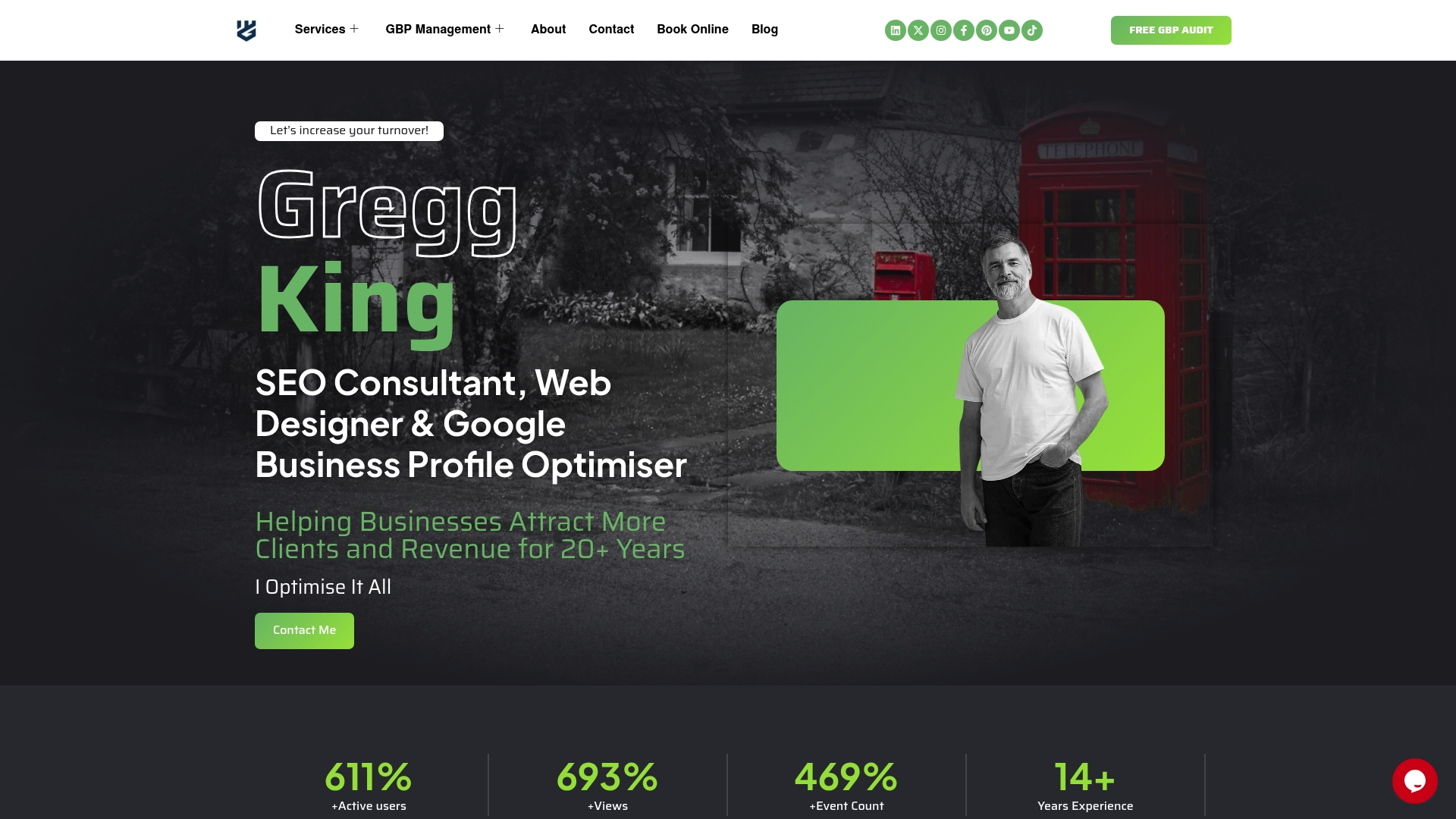
At Gregg King, we specialise in helping UK small and medium-sized businesses build websites that don’t just look good but genuinely perform. From SEO and website design help to fully bespoke professional web design, our services are tailored to your specific goals, audience, and budget. With over 20 years of hands-on experience, we know what works for British businesses and what doesn’t. Get in touch today for a free consultation and find out how we can help your site attract more local customers and grow your revenue.
Frequently asked questions
What is the most important tip for small business website design?
The most critical tip is to design your site around your specific audience’s needs and make navigation intuitive. Sites optimised for clear structure and audience intent consistently perform better in both engagement and conversion.
How can I make sure my website works well on mobile devices?
Use a responsive design template and test your site on multiple devices to guarantee a smooth experience. Mobile-optimised websites increase both engagement and conversion rates, making this a non-negotiable priority.
What’s the easiest way to improve website trust instantly?
Add client testimonials and clear contact details on every page to reassure visitors immediately. Trust elements increase user confidence and the likelihood of visitors making contact.
Does website design really impact SEO and Google ranking?
Yes, site structure, mobile responsiveness, and local signals directly influence how Google ranks your pages. Good web design substantially boosts your SEO results and your visibility in local search.